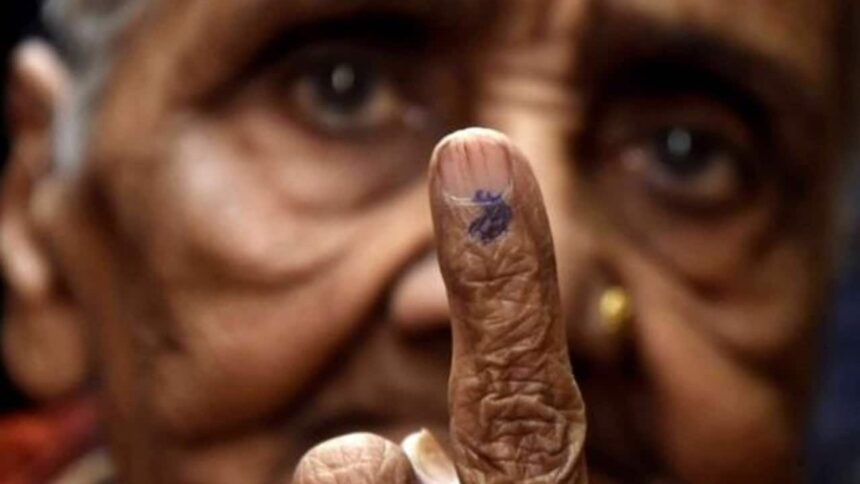
In a significant move aimed at strengthening inclusive democracy, the Madras High Court has directed the Election Commission of India, along with the Tamil Nadu and Puducherry governments, to ensure that persons with disabilities and senior citizens are able to vote without any barriers during elections.
The division bench comprising Chief Justice Manindra Mohan Shrivastava and Justice G. Arul Murugan emphasized that accessibility at polling booths is not optional but a constitutional obligation.
Strict Implementation of Election Commission Guidelines
The High Court ordered authorities to strictly implement the Election Commission’s guidelines issued on August 3, 2023, making it clear that these norms must be followed in practice and not remain on paper.
As part of the compliance process, the Chief Secretaries of Tamil Nadu and Puducherry have been directed to submit a detailed status report by the last week of January 2026, outlining the steps taken to improve accessibility for voters with special needs.
Key Facilities to Be Ensured at Polling Booths
According to the court’s directions and Election Commission norms, the following measures must be implemented at every polling station:
Special Arrangements for Persons with Disabilities
- Identification of voters with disabilities at each polling booth level
- Creation of a detailed database based on the type of disability
- Establishment of dedicated assistance desks at polling stations
Priority Voting Without Standing in Queues
- Senior citizens and persons with disabilities must be allowed to vote on a priority basis
- They should not be required to stand in long queues
- Polling staff must extend necessary support during voting
Mandatory Infrastructure Facilities
- Polling booths must be located on the ground floor only
- Proper road access and vehicle parking facilities must be provided
- Wheelchair-friendly pathways should be ensured without obstruction
Temporary Ramps Rejected, Permanent Solutions Required
The Madras High Court strongly objected to the practice of installing temporary wooden ramps only on polling day. The court ruled that such arrangements are inadequate and unsafe.
Instead, it ordered the construction of permanent cement ramps with a 1:12 gradient ratio in all public buildings used as polling stations, ensuring long-term accessibility beyond elections.
Accessible Election Websites and Mobile Apps
The court also directed the Ministry of Electronics and Information Technology to examine whether the Election Commission’s websites and mobile applications are universally accessible for persons with disabilities.
This step is aimed at ensuring equal digital access to election-related information, registration, and services.
Accountability of Government Officials
The High Court made it clear that failure to implement these directions will attract accountability, and concerned government officials may be held responsible for non-compliance.
This warning highlights the seriousness of the court’s commitment to protecting the voting rights of marginalized and vulnerable sections of society.
A Landmark Step Towards Inclusive Democracy
This ruling is being widely viewed as a landmark decision that reinforces the principle of “voting rights for all”. Just as accessibility is being increasingly emphasized in Tamil Nadu Temple News, public offices, and government institutions, polling booths must also be fully accessible to every citizen.
The judgment has gained prominence across Tamil Nadu News and Chennai News platforms, as it not only addresses election-related issues but also raises broader concerns about inclusive public infrastructure and social equality.