


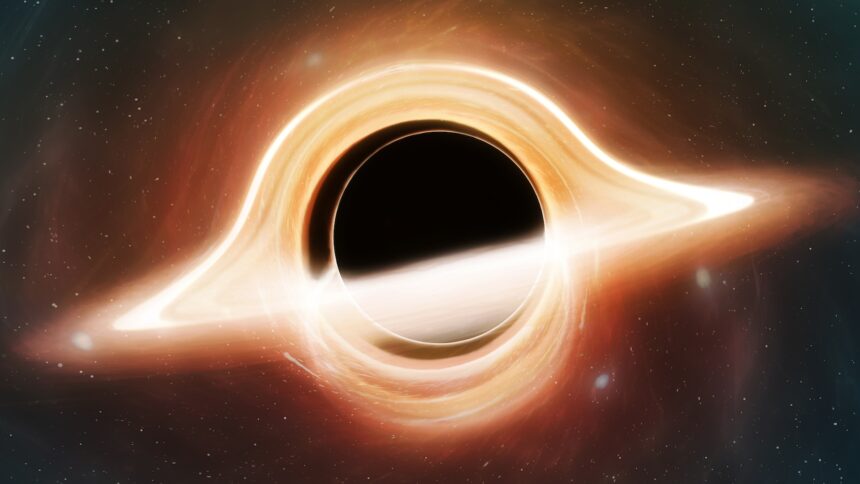
Scientists have made a jaw-dropping discovery in space the biggest black hole flare ever recorded, shining with the brightness of 10 trillion suns. According to researchers, this astonishing cosmic explosion occurred 10 billion light-years away from Earth.
The Discovery
This rare phenomenon was detected by a team of astronomers led by Matthew Graham, a research professor at the California Institute of Technology (Caltech). Their detailed study was recently published in the prestigious science journal Nature Astronomy.
“This is truly a once-in-a-million cosmic event the largest and farthest black hole flare ever observed,” said Graham.
How Did It Happen?
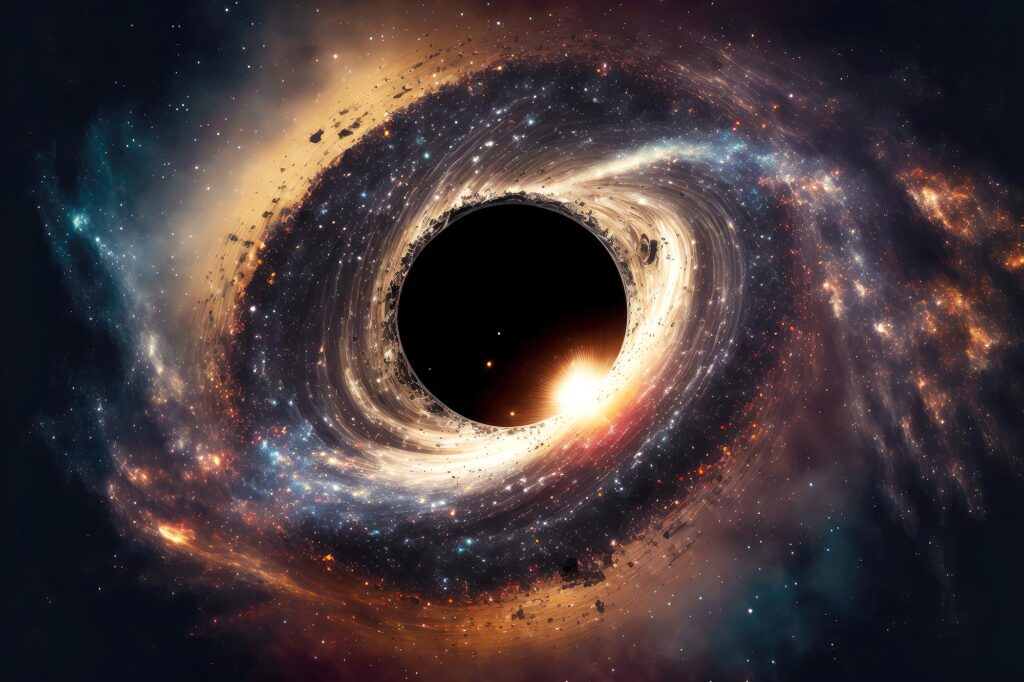
According to scientists, such an event occurs when a massive star drifts too close to a supermassive black hole. The black hole’s immense gravitational pull tears the star apart and “devours” it.
As the star is consumed, a tremendous burst of energy is released — this is what astronomers call a black hole flare.
While black holes often absorb nearby stars, gas, or dust, such enormous and luminous flares are extremely rare.
“This explosion is about 30 times brighter than any black hole flare we’ve ever seen before,” said Graham.
The Star and the Black Hole
The doomed star that met its end in this cosmic encounter is estimated to be at least 30 times larger than our Sun. The supermassive black hole that swallowed it, on the other hand, is believed to be 500 million times the mass of the Sun.
The collision between two such enormous cosmic bodies released an unimaginable amount of energy, shining brighter than anything ever recorded.
A Light That Lasts 7 Years
The flare was first detected in 2018 during a sky survey using three ground-based telescopes. At first, it appeared to be a “particularly bright object,” but scientists couldn’t gather much information at the time.
The event was almost forgotten until 2023, when Graham and his team reanalyzed old data. That’s when they realized the true scale of what they had discovered.
“We found that the bright object we observed was incredibly far away — 10 billion light-years,” Graham explained. “And if something that far away can shine that brightly, then it must be releasing an enormous amount of energy. That’s what led to this breakthrough.”
How the Star Met Its End
Astronomers believe the star may have been knocked off its usual orbit by a kind of ‘cosmic bumper car’ effect collisions or gravitational interactions with other celestial bodies that sent it spiraling toward the black hole.
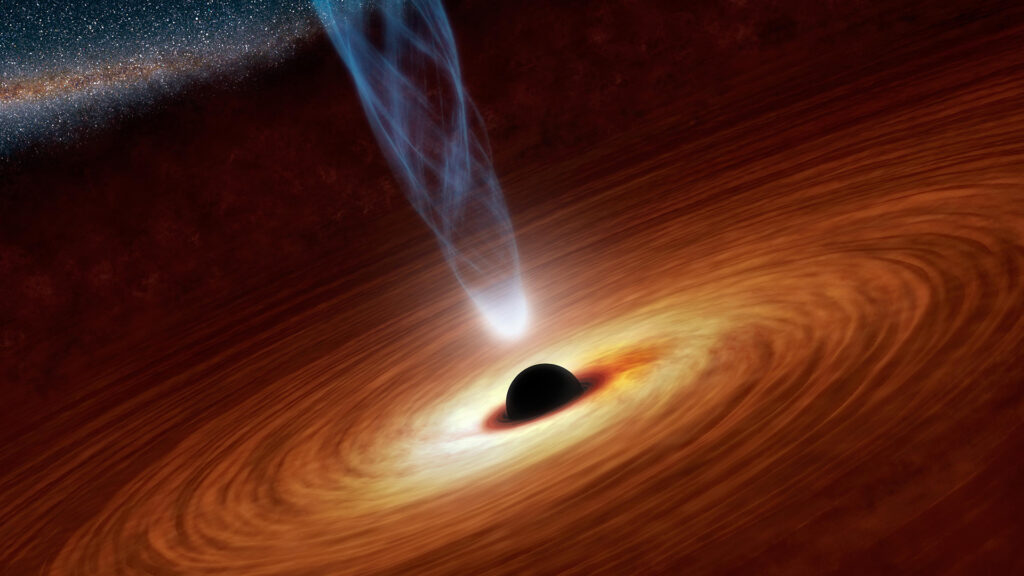
Once it got too close, the black hole’s intense gravity tore the star apart, releasing vast amounts of gas and radiation in a spectacular flare.
The light from this event took 10 billion years to reach Earth, meaning the explosion actually happened when the universe was very young.

Changing Our Understanding of Black Holes
“Our understanding of supermassive black holes has evolved dramatically in the past decade,” Graham said. “We used to think they just sat quietly at the center of galaxies. But now we know they are far more dynamic and play a huge role in shaping their surroundings.”
New research shows that black holes are not just cosmic destroyers they may also help trigger the birth of new stars and influence how galaxies evolve.
The Flare Continues
According to scientists, this gigantic flare has been ongoing for more than seven years and it’s not over yet. Though it’s gradually dimming, it will remain visible to telescopes for a few more years.
A Glimpse Into the Power of the Universe
This record-breaking black hole flare is a vivid reminder of just how mysterious and powerful our universe truly is. It reveals how black holes can destroy stars, release unimaginable energy, and reshape the cosmos all while keeping countless secrets still hidden in the depths of space.