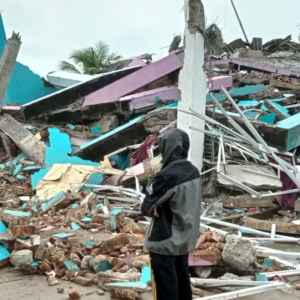



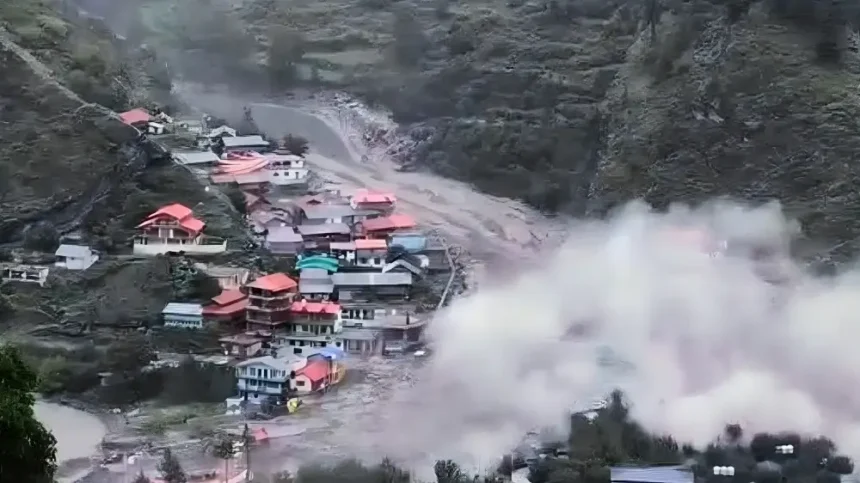
Uttarkashi, a serene district nestled in the Himalayas of Uttarakhand, has recently been struck by a devastating natural disaster that has left communities reeling. The Uttarkashi landslide, triggered by relentless monsoon rains and a cloudburst, has caused widespread destruction, particularly in areas like Dharali village, near the revered Gangotri Dham. This catastrophic event, part of a series of Uttarkashi landslide today incidents, has claimed lives, displaced residents, and disrupted connectivity, underscoring the vulnerability of hilly regions to nature’s fury.
On August 5, 2025, a massive Uttarkashi landslide occurred following a cloudburst in the Kheer Ganga river catchment area, unleashing a torrent of water and debris that swept away homes, shops, and hotels in Dharali. Reports indicate at least five fatalities, with over 50 people, including 8-10 Indian Army soldiers, still missing. The Uttarkashi landslide news has highlighted the severity of the disaster, with visuals captured by tourists showing a violent stream of debris cascading down hills, obliterating everything in its path. The overflowing Kheer Gadh drain in Harsil exacerbated the destruction, leaving the region in chaos.
The Uttarkashi landslide is not an isolated event but part of a broader pattern of monsoon-related calamities in Uttarakhand. The India Meteorological Department (IMD) had issued an orange alert for heavy rainfall, warning of potential landslides in districts like Uttarkashi, Rudraprayag, and Chamoli. The Uttarkashi landslide today incident blocked 163 roads, including five national highways, severely hampering rescue operations. The Gangotri and Yamunotri highways, critical for pilgrims, remain closed due to debris at multiple points like Silai Bend and Gujri Bend, stranding travelers and complicating relief efforts.
In response, Uttarkashi landslide emergency resources have been mobilized on a war footing. A joint team of 201 personnel from the Indian Army, NDRF, SDRF, ITBP, and local police, followed by an additional 211 responders, has been deployed. The Indian Army, stationed near Harsil, was among the first to act, rescuing at least 15 people. Chief Minister Pushkar Singh Dhami conducted an aerial survey and visited the State Emergency Operations Centre to oversee operations, ensuring food, shelter, and medical aid for the affected. The Uttarkashi landslide emergency resources include JCB machines clearing debris and helicopters on standby, though bad weather has delayed aerial rescues. The Uttarkashi District Emergency Operation Centre has issued helpline numbers—01374222126, 01374222722, and 9456556431—for those seeking assistance.
The Uttarkashi landslide news reflects the broader challenges of climate change and unplanned development in ecologically sensitive zones. Experts attribute the increasing frequency of landslides to deforestation, forest fires, and construction activities, such as road widening for the Char Dham project, which destabilize slopes. The Varunavat mountain, looming over Uttarkashi, has long been a concern due to its seismic activity and loose soil, worsened by heavy rainfall. As rescue teams continue their search for the missing, the Uttarkashi landslide serves as a stark reminder of the need for sustainable development and robust disaster preparedness to safeguard lives in this fragile Himalayan region.